Ethereum Developers Announce “Gas-Free Transactions” – Users Shocked to Learn It Means They Have to Walk to a Validator’s House
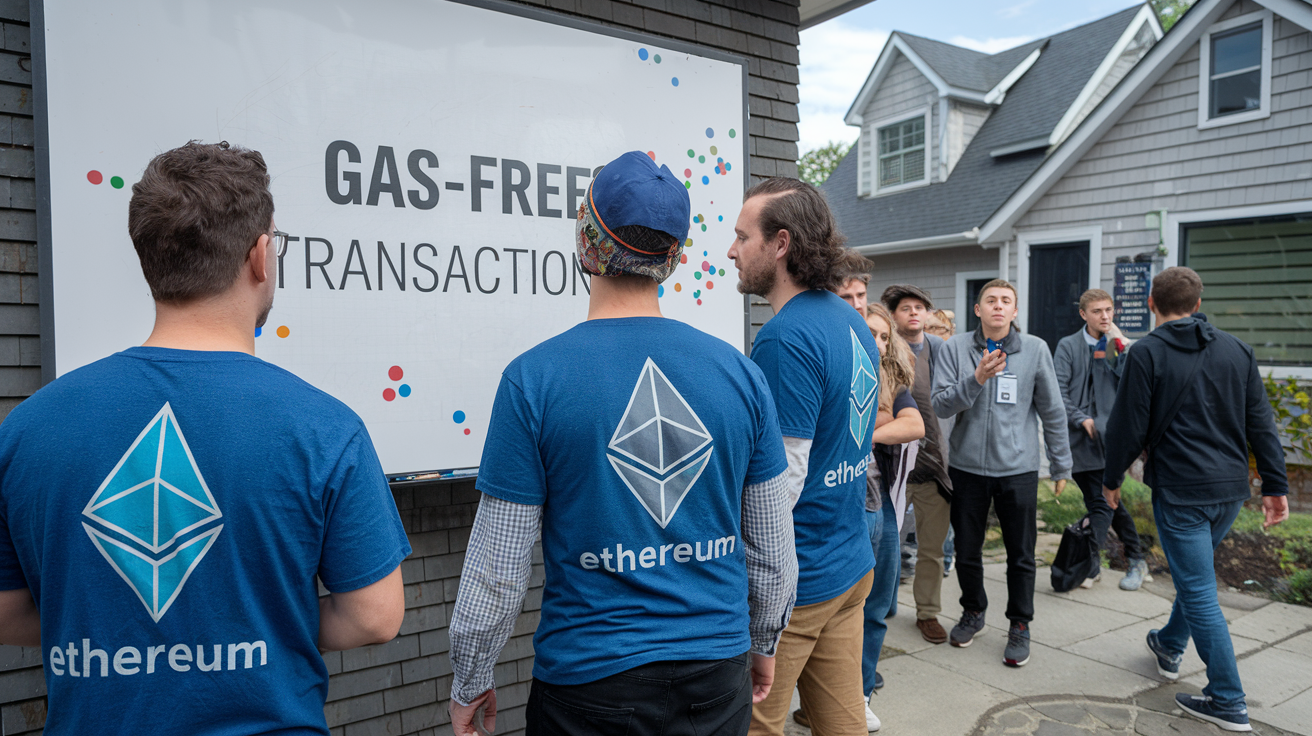
In a groundbreaking move that has left the crypto world both excited and extremely confused, Ethereum developers have announced a revolutionary new feature: gas-free transactions. However, the celebration was short-lived as users quickly discovered that “gas-free” doesn’t mean free transactions—it just means you have to physically deliver your transaction request to a validator’s house.
The Big Reveal
Ethereum co-founder Vitalik Buterin unveiled the feature in a blog post titled “Decentralization Means Exercise”. The post outlines a new way to bypass gas fees by personally submitting transactions to validators—Ethereum’s equivalent of blockchain accountants—who will then manually add them to the blockchain.
“The idea is simple,” Buterin explained in a livestream. “Instead of paying for network fees, you just find a validator near you, knock on their door, and hand them your transaction on a USB stick. It’s proof-of-walk instead of proof-of-work.”
Crypto Twitter immediately exploded, with some users praising the move as a step toward a greener Ethereum, while others angrily pointed out that validators tend to live in places like Iceland, meaning transactions would now require a round-trip flight.
The Fine Print
Users soon realized that the new “gas-free” system came with a few caveats:
- Validators Are Allowed to Charge a “Convenience Fee” – While you won’t pay gas fees, validators can still request compensation, which, according to one validator, could be “anything from a cup of coffee to a Tesla Model S, depending on how much I like your NFT collection.”
- Validators Are Not Required to Answer the Door – Reports are already surfacing of desperate Ethereum users camping outside validators’ houses, waiting days for someone to open up. “I flew all the way to Switzerland to submit my Uniswap trade,” complained one user. “But the validator just posted a sign on his door that said ‘AFK, gone fishing.’”
- Transaction Speeds Are Now Dependent on Weather – With validators living in remote locations, Ethereum’s new gas-free model has introduced a new problem: blockchain congestion due to blizzards, heat waves, and validator laziness. Transactions that once took minutes are now taking weeks, and some are even getting lost entirely. “I mailed my Ethereum transaction to a validator in Canada last month,” one user posted on Reddit. “I just got a letter back saying it was returned to sender.”
The Community Reacts
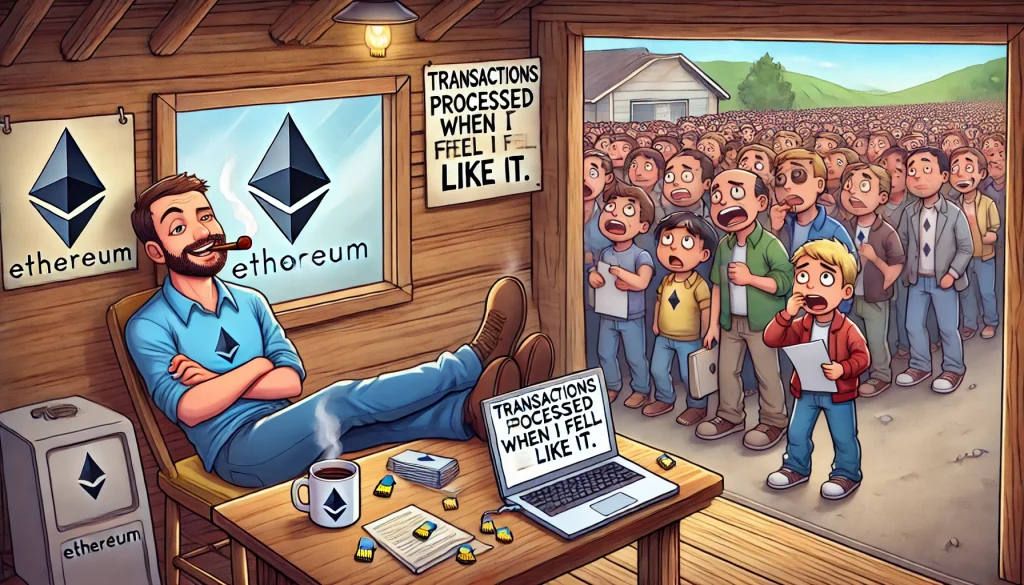
Crypto influencers have had mixed reactions to the change. Some are embracing the shift, claiming it aligns with Ethereum’s decentralized ethos. “This is great news,” said YouTuber @CryptoGuru69. “Now you can literally touch grass while sending your transactions.”
Others, however, are less thrilled. “Ethereum was already complicated enough,” tweeted user @RuggedAgain. “Now I have to buy hiking boots just to swap some tokens?”
Meanwhile, Bitcoin maximalists have seized the opportunity to mock Ethereum users. “First, they gave up mining for staking, and now they’re doing in-person transactions? Ethereum is just a medieval bartering system at this point,” tweeted @MaxiLord420.
The Future of Gas-Free Transactions
Despite the backlash, Ethereum developers remain optimistic. Vitalik has already teased “Phase 2” of the system, which will introduce validator summoning, where users can pay a small fee to have a validator come to them.
“We’re working on a decentralized Uber-like system,” Buterin said. “You just send out a request, and the nearest validator will bike to your location to process your transaction. Think of it like DoorDash, but for blockchain.”
Some investors are already speculating on a new market: renting validator homes near major cities. One enterprising user has already listed an Airbnb titled “Ethereum Validator’s Guest Room – Submit Transactions in Person, Breakfast Included.”
As the Ethereum community grapples with this new era of manual crypto transactions, one thing is clear: blockchain might be decentralized, but your legs are about to get very, very centralized.