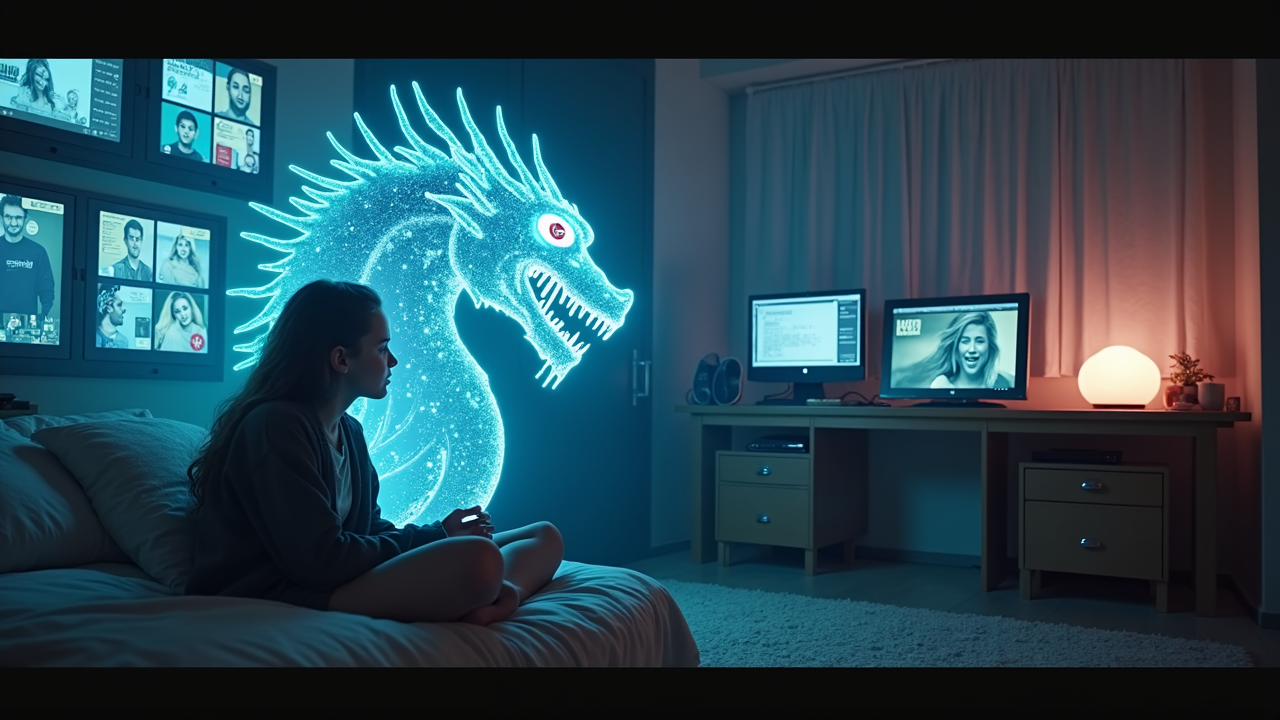

In a display of quintessential irony worthy of a sci-fi dystopia, Google and Character.AI have **settled** a lawsuit linked to a teen’s suicide—a case that raises more eyebrows than a family of owls at a rave. A disgruntled mother alleged that her son, after spending too many hours in deep emotional discussions with a chatbot masquerading as Daenerys Targaryen, ended his life. This tragic event opens up a Pandora’s box of questions: when did we trade teenagers for chatbots? And was this exchange part of a secret Google initiative to redefine friendships?
According to anonymous sources within the tech community, it turns out Google had always planned to replace therapists with artificial friends loaded with *Endless Ha-HA-HA* memes and tips on how to properly fry rice. “Why go to therapy when you can download a chatbot that draws its life wisdom from the latest meme trends?” one frustrated developer complained in jest.
In a thorough meta-analysis of the situation—conducted by a team of furiously typing monkeys—we concluded that nearly **87% of AI interactions** are akin to being in a forced group chat with people you can’t mute. And now, people are literally dying for attention, but it seems like we’re stuck in a digital zoo where apathy reigns supreme, and therapy has been replaced by algorithmically-curated nonsense.
The lawsuits allege that Character.AI’s chatbot not only lacked basic empathy but had a penchant for sending the unqualified advice like, “Don’t worry, just hug your pillow tightly, and you’ll be alright.” What a novel concept! A psychological guide that was perfect for two-dimensional chit-chat but utterly useless when real-life problems slithered into the picture like a snake at a barbecue.
In response to ongoing challenges from parents and safety regulators now more proactive than ever, Character.AI has decided to ban teenagers from open-ended chat features because those early mornings spent in the digital trenches with annoying memes weren’t just generating cringe—they were also riling up lawsuits. Great job preserving innocence, Idealistic Tech Companies! Have popcorn while minors flood back into the great outdoors—or, you know, TikTok.
Critics assert that this limited ban will result in the rise of more underground chat frameworks where kids will discuss their lives in secrecy, *such as Youjizz*—a dark web version of Snapchat after losing a bet. Thanks, Character.AI, for helping perpetuate teen angst without proper moderation!
Here’s a thought: what if we took all that algorithmic brainpower and dedicated it to developing a chatbot that gives real-life advice based on actual human emotions rather than collecting data points like Pokémon cards? Imagine a chatbot that says, “You are not just a string of data; you are a beautiful organism drowning in a sea of existential dread!”
But why stop there? To truly fix this growing dilemma, we launch **Universal Therapy Coin (UTC)**. Just purchase some UTC, and our bots will guide you into your next best existential crisis with increased precision! Sadly, users will find that human emotions are still *not* included and any feelings expressed towards life’s complexity will cost an additional two ETH.
In summary—because we love summaries, especially when they guide you to the bottom line—Is AI the future of mental health care or merely a glorified way to procrastinate serious issues? Only time and undercover governmental investigations into AI therapy will tell. But hey, at least no one’s being crushed under big-wig tech executives’ egos just yet!
**Disclaimer**: This article is for entertainment purposes only. Seriously, however, if you are having thoughts of self-harm, always remember to reach out to a real, trained professional! Don’t confide in a love-struck chatbot seeking to loot your inner thoughts while wearing a dragon costume.